报告时间:2026年3月11日下午2:30-3:30
报告地点:福州大学阳光科技大厦二楼会议室
报 告 人:Prof. Roland A. Fischer(教授、德国慕尼黑工业大学)
主持人:方元行 教授
组织单位:光催化重点实验室
联系人:方元行
联系方式:15088420958
报告摘要:
Metal-Organic Framewoks, MOFs, offer unique opportunities to integrate physico-chemical properties and functionalities by the choice and the design of the building blocks, such as metal nodes, organic linkers, hosted guests by the tailoring of their spatial arrangement, i.e. via reticular synthesis. The lecture will focus on photoactive MOFs which are characterized by using chromophores as linkers. Four case-studies will be presented and discussed (Figure): (1) Photocatalytic CO2-to-syngas evolution with dual molecular catalyst loaded NU-1000, that features a pyrene-chromophore.1 It delivers energy efficiently to the active sites, conceptually yielding a nanozyme function with benchmark turnover numbers and record incident photon conversions up to 36%. (2) Decoupled solar energy storage and dark photocatalysis in 3D MOFs.2 The embedding of Mn and Re redox centers in the confined space of the photoactive framework unlocks a unique electron accumulating property under visible-light irradiation. About 15 C gMOF−1 of electric charges can be concentrated and stored for over weeks. (3) Photochromic MOFs, functionalized with spiropyranes, feature stimulus-adaptable performance and demonstrate the ability to shift between multiple relaxation pathways as a function of the excitation wavelength. It resulted in photoswitch-directed tailoring of model phosphinylation reaction outcomes.3 Finally, (4) the tailoring and optimization of the multiphoton-absorption efficiency by MOF crystal engineering involves subtle interaction phenomena induced by pyrene, carbazole and perylene diimide chromophore packing, conformational strain and rigidification.4 The examples will be put into the wider perspective of the development of multifunctional photoactive porous network materials.
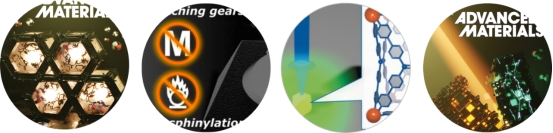
Figure. Four case studies on photoactive MOF systems and applications in energy storage and conversion.1-4
References
a) P. M. Stanley, V. Ramm, R. A. Fischer, J. Warnan, Nature Synthesis 2024, 3, 307-318; b) P. M. Stanley, A. Y. Su, V. Ramm, P. Fink, C. Kimna, O. Lieleg, M. Elsner, J. A. Lercher, B. Rieger, J. Warnan, R. A. Fischer, Adv. Mater. 2023, 35, 2207380; b)
P. M. Stanley, F. Sixt, J. Warnan, Adv. Mater. 2023, 35, 2207280.
J. Haimerl, G. C. Thaggard, B. K. P. Maldeni Kankanamalage, R. Bühler, J. Lim, K. C. Park, J. Warnan, R. A. Fischer, N. B. Shustova, J. Am. Chem. Soc. 2025, 147, 19918-19930.
a) S. N. Deger, Y. Cui, J. Warnan, R. A. Fischer, F. Šanda, J. Hauer, A. Pöthig, ACS Applied Optical Materials 2024, 2, 1770-1779; b) S. N. Deger, H. Pacheco Hernandez, Y. Cui, H. Hao, V. Ramm, D. C. Mayer, K.-N. Truong, R. A. Fischer, J. Hauer, M. Kozlowska, A. Pöthig, Adv. Funct. Mater., online, DOI: 10.1002/adfm.202506660; c) S. N. Deger, A. Mauri, Y. Cui, S. J. Weishäupl, A. D. Özdemir, H. Syed, A. Ovsianikov, W. Wenzel, A. Pöthig, J. Hauer, M. Kozlowska, R. A. Fischer, Adv. Funct. Mater.; online, DOI: 10.1002/adfm.202424656.
报告人简介:
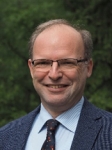
Roland A. Fischer教授于1981-1986年攻读化学专业,1989年在德国慕尼黑工业大学(TUM)获得自然科学博士学位,1995年获得德国大学特许任教资格 (Dr. rer. nat. habil.)。自2016年起,他担任该校无机化学与金属有机化学讲席教授,同时担任慕尼黑工业大学催化研究中心主任。此前,他于1996—1997年任海德堡大学无机化学教授,1997—2015年任波鸿鲁尔大学无机化学教授。2016—2021年,他担任德国科学基金会(DFG)副主席。他现任亚历山大・冯・洪堡基金会奖项评审委员会委员、德国化学工业基金科学顾问委员会委员。其研究方向主要集中在功能分子材料,研究应用领域包括能源转化、催化、气体储存与分离、化学传感及光子学。他已发表学术期刊论文约700篇,近年来先后荣获多项重要奖项:2022年获得日本配位化学会国际奖,2025年获得德国化学会威廉・克莱姆奖(Wilhelm�Klemm�Preis)。





 书记信箱
书记信箱 院长信箱
院长信箱