报告时间:2026年7月15日9:00
报告地点:福州大学化学学院嘉锡楼413
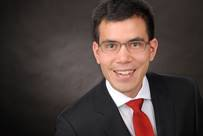
报告人: Rene M. Koenigs
组织单位:有机合成与功能福建省高校重点实验室
联系人及方式:杨凯 18059870235
报告摘要:Visible-light activation has fundamentally changed the way reactive intermediates are generated and controlled in synthetic chemistry. Beyond providing a sustainable source of energy, light offers direct access to electronically excited states whose reactivity differs fundamentally from that of their thermal counterparts. The ability to selectively access reactive intermediates with distinct spin multiplicities has opened new opportunities for reaction discovery, enabling selective bond constructions that remain inaccessible by conventional catalytic strategies. This lecture highlights the development of photochemical strategies that exploit the unique reactivity of open-shell intermediates across different spin manifolds. Beginning with doublet radical chemistry, visible-light activation has enabled catalyst-free and photocatalyst-assisted C–H functionalization reactions, late-stage diversification of complex molecules, and the selective generation of carbon-centered radicals. Extending these concepts to carbene chemistry, direct photoexcitation of diazo compounds has provided access to free singlet and triplet carbenes, revealing how subtle changes in electronic structure govern reaction selectivity and permit unconventional carbene-transfer reactions, strain-release processes, and radical cascades that complement classical transition-metal catalysis. Most recently, these concepts have been translated to nitrene chemistry, where the controlled generation of triplet nitrenes has enabled selective intermolecular amination reactions, cycloadditions, and strain-release transformations, demonstrating how spin-state control can unlock entirely new synthetic disconnections.Together, these examples illustrate how a mechanistic understanding of electronic structure and spin-state reactivity can serve as a guiding principle for reaction design. Rather than considering radicals, carbenes, and nitrenes as distinct classes of reactive intermediates, they emerge as part of a unified conceptual framework in which light enables precise control over molecular reactivity and selectivity.
报告人简介:Rene M. Koenigs 于2011年在德国亚琛工业大学获得博士学位,师从Magnus Rueping教授。随后,他加入了德国的Grünenthal GmbH公司从事博士后研究,两年之后成为该实验室的负责人。2015年,他回到亚琛工业大学担任助理教授。在此期间,他还在澳大利亚新南威尔士大学悉尼分校(2017-2020年)和印度孟买理工学院(2023-2024年)担任客座教授。2022年,他被提升为亚琛工业大学的教授,自2025年以来,他一直担任拜罗伊特大学有机化学讲座教授。他同时担任中国合肥安徽大学杰出访问教授(2024年至今)。他的荣誉包括安徽省专家人才计划(2024年)、ARC未来奖学金(2023年)、FAMOS(领导)奖(2021年)、教学奖(2021)、Otto Roehm基金(2018年)和勃林格殷格翰探索基金(2018年)。他的研究聚焦于光化学和光催化、卡宾和硝烯转移反应以及药物化学。





 书记信箱
书记信箱 院长信箱
院长信箱