报告时间:2026年11月9日上午10:00-12:00
报告地点:福州大学阳光科技大厦一楼会议室
报 告 人:Kazunari Domen(日本东京大学/信州大学)
主持人:安保正一 教授
组织单位:光催化重点实验室
联系人:林珍珍
联系方式:13675091109
报告摘要:
Sunlight-driven overall water splitting using particulate photocatalysts is of growing interest as a means of producing green hydrogen and fuels because systems based on particulate photocatalysts can be spread over large areas using potentially inexpensive processes. In order to produce green hydrogen and, by extension, green fuels using water-splitting particulate photocatalysts, it is necessary to develop photocatalysts with high solar energy conversion efficiency (5–10%) and to establish a green hydrogen production system that is cost-effective and can be deployed on a large scale. In this presentation, I shall begin by introducing the (oxy)nitride photocatalysts—Ta₃N₅ [1] and Ba₁/₃Sr₂/₃TaO₂N [2]—produced using a novel synthesis method currently under development. Ta₃N₅ photocatalysts exhibit high activity in the oxygen evolution half-reaction, with a quantum yield of more than 30 %. However, complete water splitting has not yet been achieved. Ba₁/₃Sr₂/₃TaO₂N samples synthesised from precursors using the flux method exhibit high hydrogen evolution half-reaction activity, but show almost no activity for the oxygen evolution half-reaction. However, when this sample is subjected to hydrogen treatment at high temperatures (850–900 °C), it begins to exhibit high oxygen evolution activity. Nevertheless, this sample exhibits almost no hydrogen evolution activity, resulting in a trade-off. This behavior will be discussed from the perspective of carrier dynamics. We previously constructed a green hydrogen production system with a light-receiving area of 100 m² using Al-doped SrTiO₃. We are currently constructing a green hydrogen production system with a light-receiving area of approximately 1,000 m². I will also outline the current status of this project and introduce a new type of reactor.
References:
[1] Faze Wang et al., J. Am. Chem. Soc., 2026, 148, 5316-5324.
[2] Faze Wang et al., Nature Commun., 2026, 17:2341.
报告人简介:
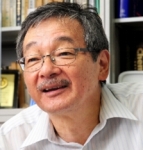
Kazunari Domen教授受聘于日本东京大学与信州大学,也是东京工业大学的名誉教授,是国际著名的光催化学者,在光催化分解水、人工光合成领域做出卓越贡献,被公认为这个领域的领跑者。曾任“第八届东京先进催化科学与技术会议”主席,“第176届法拉第讨论会:新一代能源化学材料国际学术会议”科学委员会成员等,为催化科学和技术的发展做出了重要贡献。
Kazunari Domen教授组织了一支多学科交叉的光催化创新团队,研制出一系列高效半导体光催化剂,其研发的光催化分解水平板原型装置以及一百平方米的光催化分解水平板示范装置,在光催化领域受到了广泛的关注。研究成果获得日本化学会、日本催化协会奖,以及欧洲创新理事会地平线奖、国际催化协会Heinz Heinemann奖、科睿唯安引文桂冠奖等。迄今,在《Nature》、《Nat. Mater.》、《Nat. Energy》、《Nat. Cata.》、《J. Am. Chem. Soc.》、《Angew. Chem. Int. Ed.》、《Adv. Mater.》等国际期刊上发表光催化相关论文600余篇,被引用次数超过9.7万次,H指数138。担任多种重要国际期刊的编辑/顾问,如《Appl. Catal. A》、《ChemPhotoChem》、《Chem. Sci.》、《Joule》、《Energy Environ. Sci.》等。





 书记信箱
 院长信箱